


 Forklift LiFePo4 Battery
 Golf Cart LiFePo4 Battery
 Battery Charger
Electric Forklift
Forklift Battery Applications: How to Choosing the Right Battery and Charger
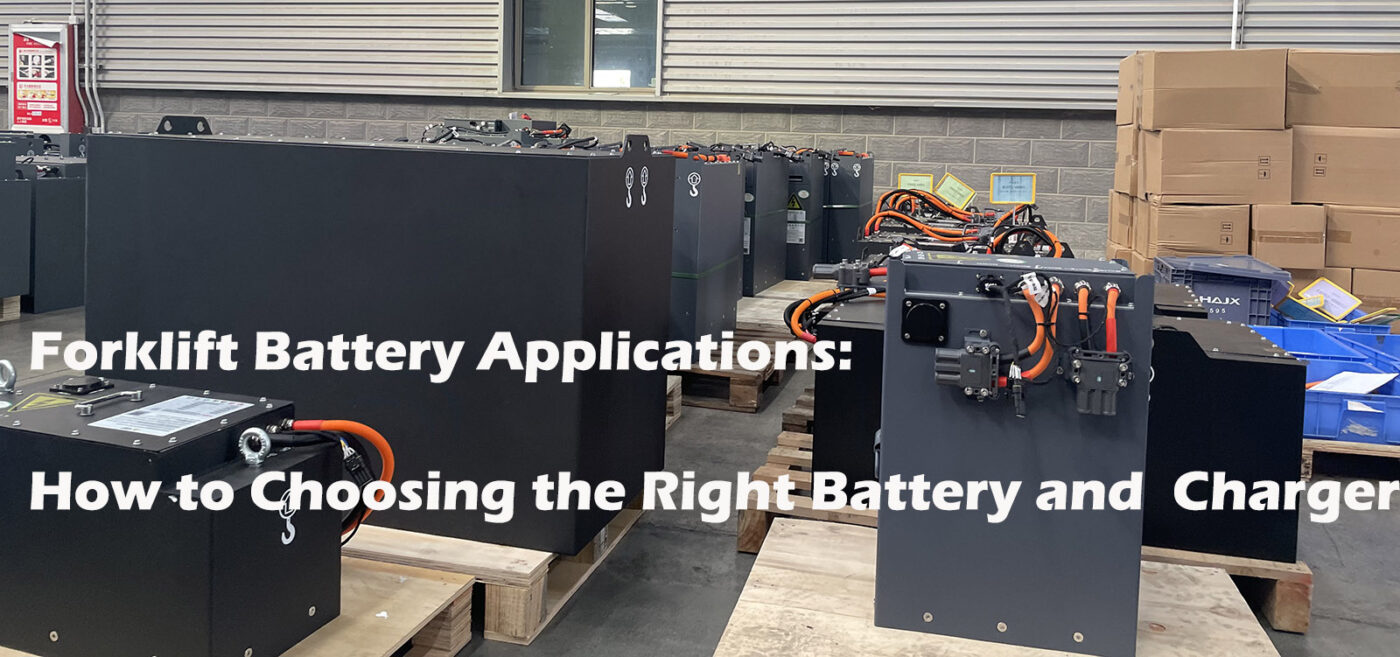
Table of Contents
In today’s material handling industry, understanding forklift battery applications is essential for warehouse managers, fleet operators, and procurement teams. Different forklifts, brands, and usage scenarios require specific battery sizes, voltage platforms, and compatible charging solutions. Selecting the wrong configuration can reduce efficiency, increase downtime, and raise long-term operating costs.
This article explains how forklift battery applications vary by equipment type, with a focus on Toyota forklift battery size as a reference framework, while also addressing related considerations such as forklift charger Yale, forklift battery selection, and Toyota pallet jack batteries.
Why Forklift Battery Applications Matter in Daily Operations
In practice, different forklift applications place very different demands on the battery.
For example, a narrow-aisle warehouse with multi-shift operation requires fast charging and stable output. In contrast, a light-duty facility may focus more on upfront cost.
Because of this, understanding how forklift battery applications vary by environment helps operators avoid underperforming or oversized battery systems.
Common Forklift Battery Applications by Equipment Type
Counterbalance Electric Forklifts
Counterbalance forklifts are the most widely used electric forklifts. Typically, they operate on 36V, 48V, or 80V battery platforms.
As a result, battery choice directly affects runtime, lifting performance, and energy efficiency.
In high-intensity applications, lithium forklift batteries deliver clear advantages. They provide consistent voltage throughout the shift and allow opportunity charging during breaks.
🔗 Related reading: Forklift Lithium Battery vs Lead Acid
Reach Trucks and Narrow Aisle Equipment
Reach trucks operate at height and require precise power delivery.
Consequently, battery stability becomes more important than raw capacity.
For these forklift battery applications, lithium batteries improve lifting consistency while reducing voltage drop at low state-of-charge. This directly improves operator confidence and safety.
How Battery Voltage Platforms Affect Forklift Applications
Different applications require different voltage platforms:
-
24V – Light-duty pallet trucks and stackers
-
36V – Small electric forklifts and indoor operations
-
48V – Standard warehouse forklifts
-
80V – Heavy-duty forklifts and outdoor yards
Because voltage affects current, heat generation, and efficiency, selecting the correct platform prevents premature battery wear.
Toyota Pallet Jack Batteries and Class III Applications
Toyota pallet jack batteries represent a specific forklift battery application focused on Class III equipment. These batteries typically operate at 24V and prioritize:
-
Compact size
-
High discharge current
-
Frequent opportunity charging
-
Lightweight design for maneuverability
Lithium batteries are especially well-suited for pallet jacks, as they support partial charging without memory effect and significantly reduce daily maintenance requirements.
Final Thoughts
In conclusion, understanding forklift battery applications helps businesses move beyond short-term cost thinking.
Instead, it enables long-term planning focused on efficiency, safety, and sustainability.
If you are evaluating a lithium upgrade for your electric forklifts or pallet trucks, our engineering team can help you match the right battery to your exact application.
Featured Forklift LiFePo4 Battery
80V Forklift Battery
Forklift Lithium-ion Battery 80v 404Ah for Toyota 7FB30-7FBJ35
48V Forklift Battery
Forklift Lithium Battery 51.2v 404Ah for Still FM-X
48V Forklift Battery
48V 519Ah Lifepo4 Lithium Battery for Heli CPD20/25-GB2/GD Forklift
80V Forklift Battery
80V 404Ah Lifepo4 Lithium Battery for CPD30/35-G1/G3 Forklift
80V Forklift Battery
80V 560AH Lifepo4 Lithium Battery for HELI CPD35-GD2
80V Forklift Battery
80V 600Ah LiFePO4 Lithium Battery for NICHIYU FBC25/30P Forklift
48V Forklift Battery
48V 201Ah Lifepo4 Lithium Battery for NICHIYU FBRM13H-70 Reach Truck
48V Forklift Battery
48V 225Ah Lifepo4 Lithium Battery for HYUNDAI 10/13BR Forklift