


 Forklift LiFePo4 Battery
 Golf Cart LiFePo4 Battery
 Battery Charger
Electric Forklift
Forklift Repair and Uptime: What Buyers Really Care About Today
Table of Contents
In warehouse and logistics operations, the most valuable equipment is not necessarily the most advanced. Instead, it is the equipment that stays available when the workload is high.
Because of this shift, forklift repair has quietly become one of the strongest buying signals in the market.
In practice, a forklift failure is never just a technical issue. Once a truck stops, receiving, picking, loading, and dispatch can all slow down. As a result, buyers are no longer asking only what a forklift can do. They are asking how long it can keep the operation running without interruption.
Why Repair Speed Matters More Than Ever
Today, warehouse operations move faster than before. Therefore, even a short downtime can affect the entire workflow.
When a forklift breaks down, the key question is not just durability. Instead, buyers focus on:
- how quickly the issue can be identified
- whether spare parts are easy to source
- how fast the truck can return to service
In many cases, repair speed directly determines whether operations stay on schedule.
Downtime Costs More Than It Seems
At first glance, maintenance costs look manageable. However, the real impact goes much further.
Downtime often leads to:
- delayed shipments
- lower labor efficiency
- temporary workload imbalance
- pressure on backup equipment
Because of this, companies now treat downtime as a business risk, not just a maintenance issue.
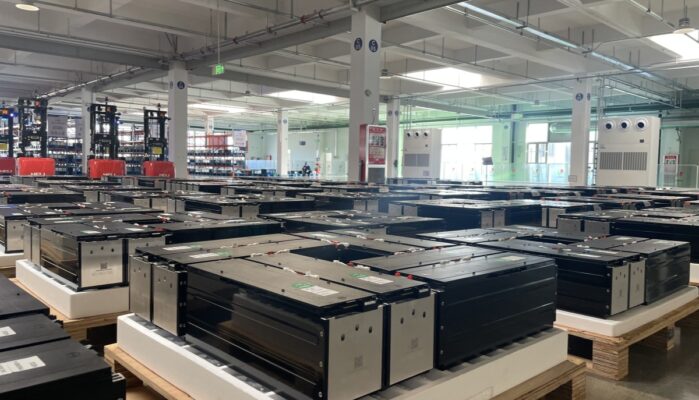
Battery Strategy Is Now About Uptime
At the same time, battery selection is being evaluated differently. Previously, companies focused on electrification trends. Now, they care more about whether the battery improves uptime.
A forklift battery is no longer just a component. Instead, it plays a direct role in productivity planning.
Typical concerns include:
- Will charging interrupt operations?
- How often does the battery require maintenance?
- Does the system need frequent swapping?
- Can the forklift maintain stable output across shifts?
This is why forklift battery maintenance has become part of the buying decision.
👉 You can also refer to our related guide:
Forklift Lithium Battery vs Lead Acid
Why Lower Maintenance Wins in Real Operations
Technical specifications alone rarely convince warehouse managers. Instead, they focus on daily usability.
For example, a battery system that reduces:
- manual handling
- maintenance time
- charging interruptions
is easier to justify than one with better theoretical performance.
As a result, many operations are now moving toward lithium solutions, simply because they reduce friction in daily work.
Energy Management Is Becoming a Real Differentiator
Meanwhile, energy efficiency is receiving more attention. Although not every buyer focuses on technical details, the practical impact is clear.
Better energy management usually means:
- longer battery life
- more stable output
- lower energy waste
- improved performance under load
In busy warehouses, forklifts rarely operate under ideal conditions. Therefore, systems that manage energy efficiently perform more reliably over time.
Where Baufar Fits in This Shift
From a practical perspective, this is exactly where solutions like Baufar lithium forklift batteries make a difference.
Instead of focusing only on specifications, Baufar designs battery systems based on real forklift usage:
- matching battery size to existing compartments
- optimizing capacity for shift-based operation
- reducing maintenance workload
- ensuring stable output across working cycles
Because of this approach, companies can improve uptime without changing their equipment structure.
Automation Is Growing, But Reliability Still Comes First
Automation is becoming more common in warehouses. However, reliability remains the foundation.
An automated system depends on stable operation. Therefore, if one forklift fails, the entire process can be affected.
This is why buyers now evaluate automation based on:
- consistency
- predictability
- uptime
In other words, automation increases the importance of forklift repair and battery reliability, not the opposite.
Buyers Are Comparing Operational Impact, Not Just Price
Today, buyers look beyond the purchase price. Instead, they evaluate the total operational burden.
This includes:
- maintenance frequency
- downtime risk
- battery handling effort
- energy efficiency
- labor impact
Because of this, a cheaper forklift is not always the better choice. If it creates more interruptions, it increases long-term costs.
What This Means for Equipment Selection
In reality, the best forklift is not the one with the most features. It is the one that supports stable operations every day.
That is why more companies now prioritize:
- uptime
- reliability
- low maintenance
- operational fit
👉 For a deeper look at how batteries affect performance, see: Forklift Battery Applications Guide
Conclusion: Uptime Is the New Standard
In conclusion, forklift battery maintenance is no longer just a maintenance topic. It has become a key factor in purchasing decisions.
Buyers now evaluate forklifts based on:
- how long they stay operational
- how easily they can be maintained
- how well they support workflow stability
That is also why battery systems, maintenance strategies, and real-world performance are now part of the same conversation.
👉 If you are looking to improve forklift uptime and reduce maintenance pressure,
Baufar can help you design a battery solution that fits your actual operation.
Featured Forklift LiFePo4 Battery
48V Forklift Battery
Nichiyu FB25PN-75 Forklift Lifepo4 Battery 48V 460Ah
80V Forklift Battery
Forklift Lithium-ion Battery 80v 404Ah for Toyota 7FB30-7FBJ35
48V Forklift Battery
Forklift Lithium Battery 51.2v 404Ah for Still FM-X
48V Forklift Battery
48V 519Ah Lifepo4 Lithium Battery for Heli CPD20/25-GB2/GD Forklift
80V Forklift Battery
80V 404Ah Lifepo4 Lithium Battery for CPD30/35-G1/G3 Forklift
80V Forklift Battery
80V 560AH Lifepo4 Lithium Battery for HELI CPD35-GD2
80V Forklift Battery
80V 600Ah LiFePO4 Lithium Battery for NICHIYU FBC25/30P Forklift
48V Forklift Battery
48V 201Ah Lifepo4 Lithium Battery for NICHIYU FBRM13H-70 Reach Truck