


 Forklift LiFePo4 Battery
 Golf Cart LiFePo4 Battery
 Battery Charger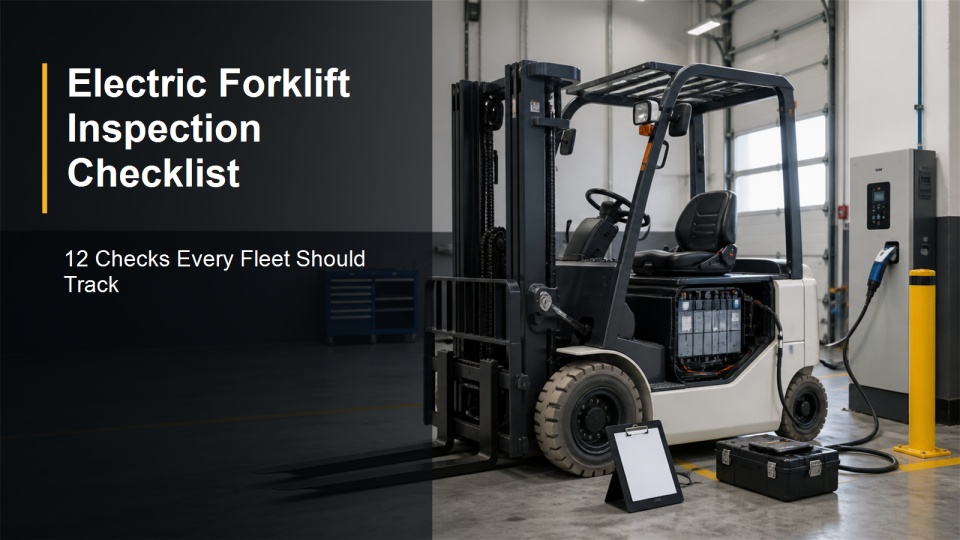
Table of Contents
An electric forklift inspection checklist should do more than confirm that a truck can move. It should catch weak brakes, loose chains, damaged forks, battery cable issues, charger faults, missing safety devices, and records that no longer match the truck.
The source article makes one useful point clear. Daily checks and formal periodic inspections are not the same job. A driver check protects the next shift. Meanwhile, a scheduled inspection reviews the machine, records, and safety performance more deeply.
Daily Checks and Periodic Inspection Are Different
Operators usually check a forklift before use. For example, they look at tires, forks, mast movement, lights, horn, brakes, fluid leaks, battery condition, and obvious damage.
However, periodic inspection has a wider scope. It reviews the truck as an industrial asset. In China, the source article notes that TSG 81-2022 changed the regular inspection cycle for most regulated forklifts from once a year to once every two years. Local rules differ by country, so fleet owners should always check the law that applies to their site.
For global buyers, the lesson travels well. Internal daily checks matter. At the same time, so does a formal inspection calendar.
1. Technical Records
Start with the paperwork. First, the inspection file should show the truck model, serial number, rated capacity, prior inspection reports, maintenance records, operating procedures, and any approved modifications.
This step sounds dull. Still, poor records often hide bigger problems. If a battery upgrade, attachment change, or counterweight change does not match the file, the truck may no longer reflect its approved configuration.
2. Worksite and Vehicle Appearance
The inspection should look at where the truck works. After all, a forklift used in narrow aisles, ramps, cold rooms, wet areas, or charging zones faces different risk.
The vehicle body also matters. Check the nameplate, frame, welds, overhead guard, visible deformation, corrosion, and signs of impact. As a result, a truck that looks rough may still run, but it may not be safe under load.
3. Power System
For internal-combustion trucks, this means engine condition, leaks, abnormal noise, and exhaust-related issues. For an electric forklift, the review shifts to motor operation, controller behavior, battery condition, cables, connectors, and charging equipment.
Battery-powered trucks deserve a close look here. In addition, an electric forklift battery should have secure restraints, clean terminals, intact insulation, and no sign of overheating.
4. Transmission and Drive System
Drive components should run smoothly. Next, inspect vibration, abnormal noise, gear response, axle condition, and any signs of drivetrain wear.
In practice, small drive problems can become safety problems. A truck that hesitates, jerks, or pulls unevenly can create risk during loading or ramp travel.
5. Travel System: Frame, Tires, and Wheels
Frames should not show cracks or serious deformation. Tires and rims should match the operating surface and load. Cuts, chunking, missing rubber, poor pressure, loose fasteners, and uneven wear all deserve attention.
Warehouse teams sometimes normalize damaged tires because the truck still moves. However, that is a mistake. Tires affect braking, stability, vibration, and battery energy use.
6. Steering System
Steering should feel smooth, predictable, and free of binding. Excessive free play, pump problems, unusual noise, and poor return behavior need repair.
This check matters most in tight spaces. In contrast, open yards give drivers more recovery room. Narrow aisles leave little room for a steering fault.
7. Lifting System
The mast should lift and lower smoothly. Forks should not show cracks, bending, severe wear, or mismatched height. Chains should have proper tension and lubrication.
Also check rollers, stops, attachment movement, and load backrest condition. Otherwise, a lifting fault can turn a normal pallet move into a dropped-load incident.
8. Hydraulic System
Inspect cylinders, hoses, fittings, valves, and fluid level. Leaks are not just housekeeping problems. Instead, they can reduce lifting control, create slip risk, and signal pressure loss.
For fleets that use side shifters, clamps, or other attachments, the hydraulic review should include every powered function. Otherwise, the inspection misses the work the truck actually performs.
9. Braking System
Service brakes and parking brakes need direct testing. A pedal that travels too far, weak reverse braking, poor parking hold, or excessive stopping distance should remove the truck from service until repair.
Brakes are simple to understand. Yet they are also easy to postpone. That is where accidents start.
10. Electrical System, Battery, and Charger
This is the battery-related section buyers should not skip. Inspect battery cables, terminal covers, connectors, insulation, charger plug condition, charge port damage, warning indicators, and heat marks.
A lithium ion forklift battery should also have a healthy BMS status, stable communication with the charger, and clear fault records. For lead-acid fleets, electrolyte handling and ventilation still need strict control.
Baufar’s forklift battery terms guide can help teams read Ah, Wh, C-rate, SOC, and SOH during battery review. For system planning, Baufar’s electric forklift battery technology article explains why cells, BMS, charger, and worksite should be checked together.
11. Safety Devices and Protective Equipment
Safety devices should be present and working. Check the seat belt, overhead guard, horn, lights, reverse alarm, speed control, lift-height limiter, interlocks, and warning devices.
These items may look minor until one is missing. However, a broken reverse alarm or missing belt can change the outcome of an otherwise small mistake.
12. Performance Tests
A good inspection ends with functional tests. These can include load handling, braking performance, parking on a grade, lifting and lowering, steering response, and attachment function. Finally, the truck must show safe behavior under work-like conditions.
The point is simple. A forklift must prove safe behavior, not only look acceptable at rest.
What Happens When a Truck Fails Inspection?
Do not keep using a failed truck. Remove it from service, repair the listed defects, document the work, and return it only after the required approval or recheck.
This approach matches a basic global safety principle. If a powered industrial truck shows a condition that affects safe operation, the fleet should stop using it until the issue is corrected. Therefore, a failed inspection should trigger action, not debate.
A Practical Fleet Action Plan
- Build a list of every forklift, battery, charger, attachment, and rated capacity.
- Record the last formal inspection date and the next due date.
- Keep daily pre-shift checks separate from periodic inspection records.
- Flag trucks due for inspection within the next three months.
- Check battery cables, chargers, connectors, and fault logs during every planned service.
- Repair missing seat belts, damaged overhead guards, failed horns, and weak brakes immediately.
- Train operators to report defects before the truck enters service.
- Review the forklift battery charging station as part of the wider safety program.
Final Takeaway for Electric Forklift Fleets
An electric forklift inspection checklist is not paperwork for its own sake. It protects uptime, people, products, and the battery investment.
Daily checks catch visible problems. Periodic inspections catch deeper risk. Together, they give fleet managers a cleaner view of truck condition, battery health, and site readiness.
Featured Forklift LiFePo4 Battery
48V Forklift Battery
51.2v 460Ah Forklift Lithium Battery For BT RR-M6
48V Forklift Battery
Nichiyu FB25PN-75 Forklift Lifepo4 Battery 48V 460Ah
80V Forklift Battery
Forklift Lithium-ion Battery 80v 404Ah for Toyota 7FB30-7FBJ35
48V Forklift Battery
Forklift Lithium Battery 51.2v 404Ah for Still FM-X
48V Forklift Battery
48V 519Ah Lifepo4 Lithium Battery for Heli CPD20/25-GB2/GD Forklift
80V Forklift Battery
80V 404Ah Lifepo4 Lithium Battery for CPD30/35-G1/G3 Forklift
80V Forklift Battery
80V 560AH Lifepo4 Lithium Battery for HELI CPD35-GD2
80V Forklift Battery
80V 600Ah LiFePO4 Lithium Battery for NICHIYU FBC25/30P Forklift